DeepField

Best Autoguiders and Guide Scopes

Autoguiding corrects the small tracking errors every mount produces, keeping stars round through multi-minute exposures. A typical autoguiding system consists of a small guide scope or off-axis guider, a guide camera, and PHD2 software. We cover complete guiding rigs from budget 50 mm mini-guide-scope and ASI120MM combos through off-axis guiders for long focal-length systems, ranked by ease of setup, sensitivity, and compatibility with popular imaging controllers.

Quick answer

The ZWO ASI220MM Mini paired with a 50 mm or 60 mm guide scope and PHD2 is the most popular autoguiding setup in 2025, delivering sensitive monochrome guiding at a combined cost under $400. For long focal-length refractors and SCTs, the ZWO OAG-L off-axis guider eliminates flexure entirely by sharing the main telescope optical path.

DeepField may earn a commission from links below, at no cost to you. Last updated June 2026.

Top Pick ZWO ASI220MM Mini Guide Camera
4.7 Amazon

ZWO ASI220MM Mini Guide Camera

A sensitive monochrome guide camera with a Sony IMX220 sensor and native USB-C, designed as the primary guide camera in the ZWO ASIAIR and PHD2 ecosystems.

Best for Astrophotographers setting up their first autoguiding system who want maximum compatibility with PHD2 and the ASIAIR.

High sensitivity IMX220 sensor finds guide stars quickly even through thin cloudsNative USB-C and ASIAIR compatibility for a clean one-cable connectionCompact 30 mm body works with any guide scope or OAG Monochrome only; color guide cameras are slightly cheaper but less sensitive
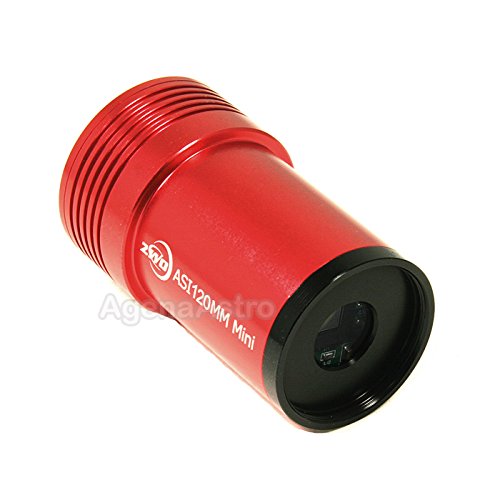
No. 2 ZWO ASI120MM Mini Monochrome Guide Camera
4.5 Amazon

ZWO ASI120MM Mini Monochrome Guide Camera

The long-established budget guide camera standard, an IMX179-based monochrome sensor in a tiny 30 mm body, still a reliable and affordable way into autoguiding.

Best for Budget-conscious beginners who want a reliable, proven guide camera without paying for the latest generation sensor.

Proven across a very large number of autoguiding setups worldwideVery affordable entry point for a dedicated guide cameraTiny form factor fits any guide scope or OAG without adding significant weight IMX179 sensor is less sensitive than the newer ASI220MM Mini
No. 3 ZWO OAG-L Off-Axis Guider
4.5 Amazon

ZWO OAG-L Off-Axis Guider

An off-axis guider that inserts between the imaging telescope and camera to pick off a guide star from the main optical path, eliminating differential flexure at long focal lengths.

Best for Imagers working at focal lengths above 1000 mm where guide scope flexure causes periodic star elongation in one direction.

Eliminates guide scope flexure entirely by sharing the main optical pathDesigned for ZWO ASI cameras with a tight mechanical interfaceLarge prism design captures guide stars from near the edge of the imaging field Finding a guide star in the OAG field requires camera rotation, adding time at the start of a session
No. 4 ZWO 30mm f/4 Mini Guide Scope
4.4 Amazon

ZWO 30mm f/4 Mini Guide Scope

A compact 30 mm f/4 guide scope weighing under 200 grams that pairs directly with ZWO guide cameras and mounts with a standard dovetail foot.

Best for Imagers on short-to-medium focal length setups who want the lightest possible guide scope without sacrificing reliability.

Lightweight and compact, adds minimal load to the imaging side of the dovetail120 mm focal length gives a wide field for easy guide star acquisitionDesigned to pair with ZWO guide cameras directly Small aperture means fewer guide stars available in sparse fields
No. 5 SVBONY SV165 60mm Guide Scope with Helical Focuser
4.3 Amazon

SVBONY SV165 60mm Guide Scope with Helical Focuser

An affordable 60 mm aperture guide scope with a helical focuser and mounting rings, delivering more guide star options than a 30 mm mini scope at a very low price.

Best for Beginners who want a step up from a tiny mini guide scope without moving to a premium brand.

60 mm aperture significantly increases the number of available guide starsHelical focuser allows precise focus adjustment without a star-drift methodIncludes mounting rings and dovetail bar 240 mm focal length gives a narrower field than 30 mm mini scopes

The method

How we chose

We evaluated each option on fit, build quality, daily usability, and value. Our top pick, ZWO ASI220MM Mini Guide Camera, earned the spot because the best current guide camera for zwo-ecosystem setups and a top phd2 performer. replaces the older asi120mm mini as the recommended choice. The comparison above highlights exactly who each pick is best for.

FAQ

Best Autoguiders and Guide Scopes: FAQ

Should I use a guide scope or an off-axis guider?+

Guide scopes are easier to set up and work well with focal lengths under about 1000 mm because differential flexure between the guide scope and the main tube is small enough to ignore. Off-axis guiders pick off light from inside the main optical path, eliminating flexure at the cost of a smaller guide-star field and a more complex setup. At focal lengths above 1000 mm or with smaller sensors, an OAG is usually the better choice.

How do I know if my guide camera is sensitive enough?+

A guide camera only needs to find a magnitude 8 to 10 star reliably in its field of view, which most dedicated astro guide cameras handle easily. The key factor is the combination of guide scope aperture and camera pixel scale. A 50 mm guide scope gives a wide field to find guide stars; if your sky is poor, moving to a 60 or 80 mm guide scope gives more stars to choose from.

Can I use my main imaging camera to guide?+

Only if you add an off-axis guider. You cannot use the main camera alone because it is capturing the long exposure you are trying to guide. An OAG inserts a pick-off prism in the light path that diverts a small fraction of the field to a dedicated guide camera, so both cameras run simultaneously from the same optical axis.

What PHD2 settings should I start with?+

PHD2's built-in Guiding Assistant is the right starting point. Run it for five to ten minutes while the mount tracks, and it will calculate recommended hysteresis, aggressiveness, and minimum move values for your specific mount. Avoid manually tuning these values until you understand what the Guiding Assistant baseline tells you about your mount's periodic error profile.