Narrowband Filters for OSC Cameras: Which to Buy
By DeepField · 10 min read · Updated June 2026
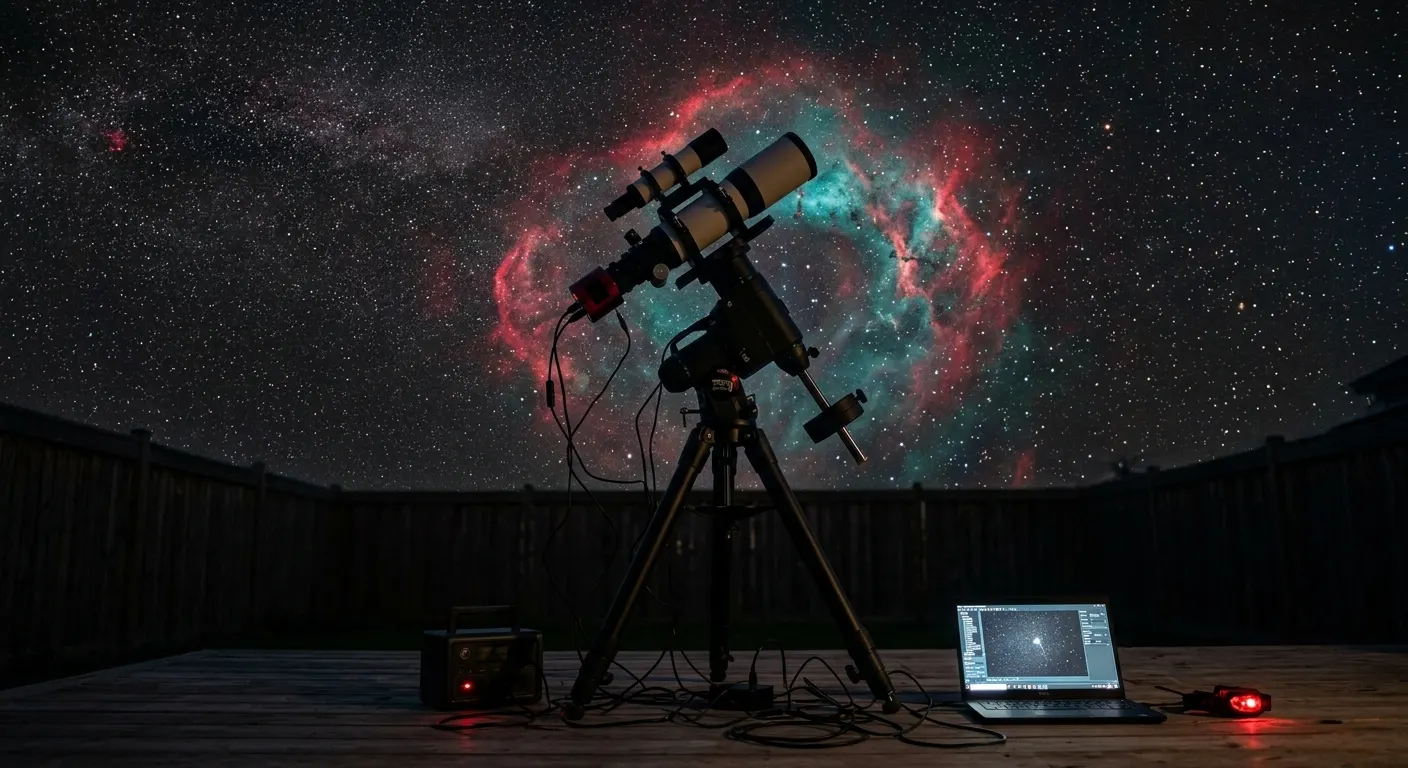
Light pollution is the most frustrating obstacle for most astrophotographers, but narrowband filters have genuinely changed the equation for city and suburban imagers. A good dual-band filter like the Optolong L-eXtreme Dual-Band Filter (7 nm) blocks virtually all LED and sodium streetlight while passing the narrow emission lines that nebulae radiate in hydrogen-alpha and OIII. The result is that a one-shot color camera on a suburban rooftop can produce images that rival what a monochrome setup captured a decade ago from a moderately dark site. Choosing the right filter is a matter of matching bandwidth, sky conditions, and target type to your camera. Here is how to think through the decision.
Quick answer
The Optolong L-eXtreme with its 7 nm dual passband is the best choice for most OSC imagers under moderate to severe light pollution targeting emission nebulae. For darker skies or wider-bandwidth targets like reflection nebulae, the Optolong L-eNhance at 25 nm is gentler and easier to process. For broadband targets like galaxies, use the Optolong L-Pro filter instead.
This guide contains affiliate links. DeepField may earn a commission at no cost to you.
Understanding bandwidth: 7 nm versus 25 nm versus broadband
A narrowband filter is defined by its bandwidth, the width of the wavelength window it allows through. A 7 nm filter lets through a very narrow 7 nanometer slice of light centered on H-alpha and OIII. A 25 nm filter lets through a wider slice. A broadband LP filter passes a broad section of the visible spectrum while blocking only the specific wavelengths emitted by artificial lights.
Tighter bandwidth means more aggressive light pollution rejection. Under a Bortle 7 or 8 city sky, a 7 nm filter like the Optolong L-eXtreme Dual-Band Filter (7 nm) suppresses the sky glow far more effectively than a 25 nm filter. The trade-off is that tight filters require longer exposures to accumulate the same signal, and the color information from a one-shot-color Bayer sensor is interpreted differently than in a broadband image.
Wider filters like the Optolong L-eNhance Dual-Band Filter (25 nm) at 25 nm are better choices in darker Bortle 4 to 6 skies where the 7 nm filter over-suppresses and makes even bright nebulae look thin. They also preserve more natural star colors, which makes the processing workflow closer to standard broadband techniques.
For galaxies, clusters, and reflection nebulae, narrowband filters of any bandwidth are the wrong tool. Galaxies do not emit strong H-alpha or OIII light; they reflect broadband starlight. Under those conditions, use a broadband LP filter like the Optolong L-Pro Broadband Light Pollution Filter , which cuts artificial light while passing enough of the visible spectrum to produce natural-looking galaxy images.

Optolong L-eXtreme Dual-Band Filter (7 nm)
A 7 nm dual-band narrowband filter passing H-alpha and OIII designed specifically for one-shot-color cameras under heavy light pollution. One of the most popular emission-nebula filters for OSC imagers.

Optolong L-eNhance Dual-Band Filter (25 nm)
A wider 25 nm dual-band filter passing H-alpha and OIII plus H-beta, gentler than the L-eXtreme and better suited to moderately dark skies where a full narrowband cut is too aggressive.
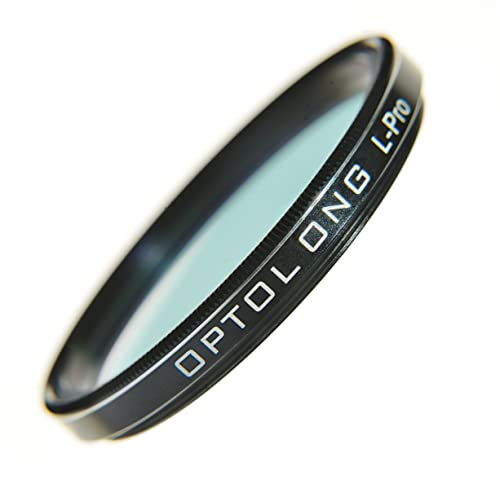
Optolong L-Pro Broadband Light Pollution Filter
A broadband multi-bandpass filter that blocks artificial light pollution while passing a wide slice of the visible spectrum, suitable for galaxies, star clusters, and reflection nebulae from bright skies.
The Optolong L-eXtreme: the default choice for city imagers
The Optolong L-eXtreme Dual-Band Filter (7 nm) has become the most widely used narrowband filter for OSC cameras under light pollution. It passes a 7 nm window around H-alpha at 656 nm and a 7 nm window around OIII at 500 nm. The two emission lines map naturally to the red and teal channels of a standard Bayer-matrix color sensor, so the raw frames look cyan-ish under normal processing but separate cleanly into strong H-alpha and OIII signals when processed with a modified workflow.
The L-eXtreme excels on emission nebulae: HII regions like the Orion Nebula and Rosette, planetary nebulae, and supernova remnants like the Veil all respond well. It is genuinely impressive from a Bortle 8 inner-city location with enough integration time. Budget at least two to four hours of total integration for a bright target and six or more hours for a faint one.
The limitation is processing complexity. OSC narrowband images need a different approach than broadband data. The SHO Hubble palette is not directly achievable from a dual-band filter with one OSC camera; instead, most imagers work in HOO (H-alpha mapped to red, OIII to both green and blue) which produces a more natural-looking color rendition of the emission structure.
Optolong L-eXtreme Dual-Band Filter (7 nm)
A 7 nm dual-band narrowband filter passing H-alpha and OIII designed specifically for one-shot-color cameras under heavy light pollution. One of the most popular emission-nebula filters for OSC imagers.
Premium alternatives: IDAS NBZ and Antlia AHa
Two filters are worth considering if the L-eXtreme produces visible star halos at your telescope's focal ratio. The IDAS NBZ Duo-Band Nebula Booster Filter uses a multi-notch coating technology that produces cleaner passband transitions, which typically means fewer halos on fast refractors and astrographs at f/3.5 to f/5. It is more expensive than the L-eXtreme and less widely stocked, but the optical quality is recognized across European and Japanese astrophotography communities.
The Antlia AHa 5nm Dual-Band Filter offers a slightly tighter 5 nm passband compared to the L-eXtreme 7 nm. The tighter bandwidth gives marginally higher contrast on emission targets at the cost of even longer required exposure times. Antlia has built a reputation for low halo performance on fast telescopes, making it a direct comparison for any imager who has tried the L-eXtreme and found halos problematic at their focal ratio.
IDAS NBZ Duo-Band Nebula Booster Filter
A dual-band H-alpha and OIII filter from IDAS that uses multi-notch coating technology for smooth passband transitions and is highly regarded among OSC imagers in Japan and Europe.
Antlia AHa 5nm Dual-Band Filter
A tight 5 nm H-alpha and OIII dual-band filter from Antlia that competes directly with the Optolong L-eXtreme at a similar price, with a reputation for minimal star halos on fast scopes.
Filter size and sensor coverage: what to check before ordering
Most narrowband filters are sold in 1.25 inch, 2 inch, and 48 mm threaded formats. A 2 inch filter covers APS-C sensors easily. Full-frame mirrorless bodies and large dedicated astro cameras like a Sony A7 series or a ZWO ASI294MC Pro can show vignetting with a 2 inch filter. For these larger sensors, a 3 inch filter or a clip-in filter designed for the specific camera body is necessary.
For stock or modified DSLRs and mirrorless cameras, clip-in filters like the Optolong clip-in range insert between the lens mount and the sensor without requiring a filter wheel or thread adapter. Confirm that the clip-in version is available for your specific camera body before ordering, since the clip-in form factor is body-specific.
Processing tips for dual-band OSC frames
Dual-band frames from an OSC camera look unusual before processing: the sky background is not black but dark teal or gray, and bright nebulae appear high-contrast but with a limited color palette. This is expected behavior, not a problem with the filter or the capture.
The standard workflow is to stretch the image normally, then use a selective color or hue-saturation adjustment to separate the H-alpha reds from the OIII teals. In PixInsight, the SCNR Green process removes the green channel cast that appears in some dual-band OSC frames. Many imagers then use a variant of the Foraxx palette or a weighted HOO mapping to produce a natural-looking final color balance.
One practical tip: capture your flat frames with the filter in place, under the same sky, on the same night. Flat fields without the filter will not correct the vignetting pattern the narrowband filter introduces, especially near the edges of a large sensor.
Featured in this guide
Optolong L-eXtreme Dual-Band Filter (7 nm)
A 7 nm dual-band narrowband filter passing H-alpha and OIII designed specifically for one-shot-color cameras under heavy light pollution. One of the most popular emission-nebula filters for OSC imagers.
Optolong L-eNhance Dual-Band Filter (25 nm)
A wider 25 nm dual-band filter passing H-alpha and OIII plus H-beta, gentler than the L-eXtreme and better suited to moderately dark skies where a full narrowband cut is too aggressive.
Optolong L-Pro Broadband Light Pollution Filter
A broadband multi-bandpass filter that blocks artificial light pollution while passing a wide slice of the visible spectrum, suitable for galaxies, star clusters, and reflection nebulae from bright skies.
IDAS NBZ Duo-Band Nebula Booster Filter
A dual-band H-alpha and OIII filter from IDAS that uses multi-notch coating technology for smooth passband transitions and is highly regarded among OSC imagers in Japan and Europe.
Antlia AHa 5nm Dual-Band Filter
A tight 5 nm H-alpha and OIII dual-band filter from Antlia that competes directly with the Optolong L-eXtreme at a similar price, with a reputation for minimal star halos on fast scopes.
Keep reading
Related comparisons
Related roundups
FAQ
Frequently asked questions
Can I use an L-eXtreme filter on a stock DSLR?+
Yes. The Optolong L-eXtreme is designed specifically for one-shot-color cameras including stock and modified DSLRs, mirrorless bodies, and dedicated OSC astro cameras. It passes the H-alpha and OIII emission lines that map to the red and teal channels of a standard Bayer sensor. The processing workflow is different from standard broadband frames, but the filter itself works with any OSC camera.
How long do exposures need to be with a narrowband filter?+
Longer than broadband frames. A dual-band 7 nm filter blocks most of the light entering the telescope, so you need two to three times the integration time you would use for a broadband target under the same sky. Under a Bortle 7 sky, plan on three to five minute individual subs and at least four to six hours of total integration for a good result on a bright nebula. Faint targets need substantially more.
Will a narrowband filter help on galaxies?+
No. Galaxies emit broadband starlight, not strong H-alpha or OIII emission. A narrowband filter suppresses most of the broadband light along with the light pollution, making galaxy images look dim and monochrome. For galaxies under light pollution, use a broadband LP filter like the Optolong L-Pro, which reduces sky glow while passing enough of the visible spectrum for natural-looking galaxy images.
Does my focal ratio matter for filter selection?+
Yes. Very fast telescopes at f/2 to f/2.8 have light hitting the filter coating at steep angles that can produce star halos because the coating was designed for a flatter angle of incidence. Most quality narrowband filters work well to f/3.5 to f/4 without significant halos. If you image at f/2.8 or faster, check the filter manufacturer's minimum f-ratio spec, and consider the IDAS NBZ or Antlia AHa which have reputations for better fast-optic performance.